|
|
|
My 940 turbo died on the highway, sputtering stop. After waiting a few minutes it would start again and run for a few minutes. Had it towed to a shop that replaced both pumps. Worked fine after that.
Four months later it happened again. Found that if I waited 5-10 minutes, it would start fine and run for 1-3 miles before dieing. I replaced the fuel filter. Worked fine after that.
A week later it started doing it again. I installed a back-up fuel pump relay. No difference. I jumped the radio suppression relay. No difference. I checked the fuel pressure at the rail. It went up to 35 psi then it started coming back down and settled at 20 psi. So can it be the fuel pressure regulator? What else can I do but replace it?
|
|
|
|
|
One last update on this saga. I took out the in tank pump and could not get it to run with two wires directly from the battery. I also found that they had put the old in-tank filter back on the pump. It had holes and was falling apart. Maybe parts had come off and clogged the pump. I called the shop in San Antonio who said they would honor the warranty if I could bring in the car --- 200 miles away. They agreed to send me a new pump if I would send the broken one and if they tested it an found it broken. I sent it to them. They called and said it was fine. Even sent me a video of a pump running. They said they put the old filter on because I was in a hurry and they did not have one in stock. They offered to return my pump that they said was working if I would pay for the return charges. Given that they had originally charged me $140 for the no-name pump that could be purchased for $40 and the Bosch main pump for $286 that sells for $98, and that the whole problem may have been due to a bad regulator, I am feeling pretty much ripped off. I have ordered a pump and a filter from Eeuroparts and will do it myself.
|
|
|
|
|
Assuming the pump you pulled out looked all shiny and new, I am gonna assume the shop replaced the in tank pump, and maybe it really was dead. But it did not fix your problem, because it was not the cause of the intermittent dieing and then restarting. It was A problem, but not THE problem. I have run these two pump models with a dead in-tank pump and barely even noticed it until the tank is less than a 1/4 full. I am gonna take a wild guess and suggest the "Power Stage" or ignition amplifier is pooping out on ya. Don't get me wrong, if the in tank pump is dead, replace it. But I would pick up a JY spare Bosch or Knock off version FCP sells and carry it around....just in case. Time will tell, good luck.
|
|
|
|
|
Dear Philip,
Hope you're well. If you couldn't get the pump to run with 12 volts direct from the battery, no one could get that pump to work. I suspect the video you were shown does not depict the pump, that you removed.
I think the in-tank pump failed, and their replacement was "junk". I'd pay for the return of the "working" pump, and re-test it, just for the sake of good order. I'd bet it doesn't work. If so, I'd let them know that. If you paid via credit card, you can dispute the charge. That may get these folks to see reason.
Hope this helps.
Yours faithfully,
Spook
|
|
|
|
|
Although it is now running well and there is 35 psi at the rail at idle, the suggestion from Art that it might be the (4 month old) in-tank pump got me thinking. So this morning I went out to check it. No sound and no pressure at the shraeder valve before the main pump. I disconnected the connection in the rear left compartment (this is a 945) and jumped 12 volts to the pink wire and connected the black to a ground. Nothing. So I guess the next step is to pull the in-tank pump out and take a look to see if it failed or if the shop did not install it correctly.
|
|
|
|
|
Wow. This is why we work on our own cars, and why the FAQ is such a valuable resource. But you can't carry all the tools and a mobile shop around with you.
|
|
|
|
|
So I pinched the hose after the FPR and the pressure jumped up like it should. After I released it, the pressure came down to 35 psi and remained there. Maybe air in gauge or sticking new FPR? But now the pressure seems to be normal. When I took it out for a drive, the sluggishness that I had accepted as old age was gone. I will declare it fixed for now and drive it around town for awhile before I attempt another highway trip.
|
|
|
|
|
This makes wonder(you putting things back together and the symptoms disappearing). I saw a video on this site the other day that showed the vacuum hose attached to the FPR with a wicked small hose clamp. All the B230F's I have owned have had them simply pushed on, rely solely on friction to retain and or make a seal. Could a clamp be useful in creating a better seal? Could air leaks there be an issue....I think I am gonna slap one on now for hahahs! Thanks for the idea.
|
|
|
|
|
A clamp is not needed on the vacuum line all you need is a reasonably new piece of tubing and it seals very well.
Dan
|
|
|
|
|
Agreed Dan, but how many of these 20 year old cars still have that original(baked and stiff) vacuum line in place? I just checked, and mine seals...kinda. I looked and don't have a small enough hose clamp downstairs, so I will either be replacing the hose or getting a small clamp, as soon as is practical. Just seems like an efficient transfer of vacuum to FPR would help response IMHO. Hehe who knows!
|
|
|
|
|
If you must do this, just get a twist tie from a garbage sack or a loaf of bread if you can find one that still uses them.
|
|

|
|
My guess is the problem is electrical. There is a high resistance connection in the fuel pump circuit, or if this is a two-pump Bosch arrangement, the tank pump is not working.
For one thing, a leak at the vacuum port would raise the pressure and give it more fuel, not less. A clamp there is not gonna fix this.
--
Art Benstein near Baltimore
Until I was thirteen, I thought my name was shut up. - Joe Namath
|
|
|
|
|
You are likely correct Art. Sorry if my suggestion came across as the solution to the posters problem. I just meant it seemed worthy to me of the time/expense required to add a clamp. It just struck me as a potential weak point.
|
|
|
|
|
Actually, my comment on the clamp is wrong. The FPR diaphragm not seeing full manifold vacuum might enrichen the mixture, but the unmetered air drawn in at the leak might lean it even more? Anyway I apologize for my snark. Wasn't any call for mentioning the clamp.
--
Art Benstein near Baltimore
TORTA CUBANA - HAM, STEAK, SPICY PORK, HOT DOG, EGG, JALAPENO, AVOCADO, ONIONS, QUESO FRESCO, LETTUCE AND MAYONNAISE. SERVED ON FRESH GRILLED MEXICAN BREAD...7.99
|
|
|
|
|
I installed a new Fuel Pressure Regulator this morning. Now the pressure at the rail is 30 psi and 36 psi without the vacuum hose attached. It seems to be stable and not drifting down.
So are these numbers close enough or do I need to continue searching, eg, voltage at the pumps?
|
|
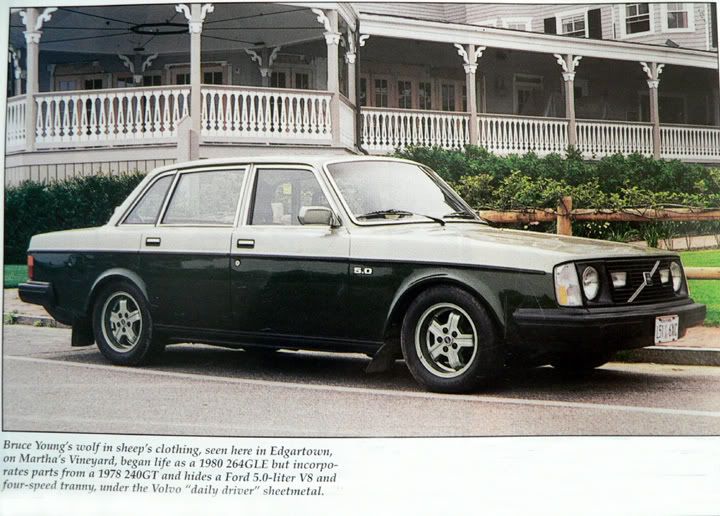
|
|
"Now the pressure at the rail is 30 psi and 36 psi without the vacuum hose attached."
That's low. Should be nominal 36, and 45 with vac hose off.
--
Bruce Young, '93 940-NA (current), 240s (one V8), 140s, 122s, since '63.
|
|
|
|
|
Time will tell, drive it and see if the stall reoccurs. My guess is it is something else causing it to die like an intermittent fuel system relay or CPS.
Dan
|
|
|
|
|
fpr; that's too low to push fuel through the injectors. What shop? They should have checked IMO.
|
|
|
|
|
It was a shop in San Antonio. Now I wonder if they just measured low fuel pressure and assumed it was the pumps. I am wondering if was the regulator all along. Maybe the new pumps had enough more push to overcome the regulator that was going bad after they started it up again and it ran, and it ran for the 4 months that the new pumps seemed to have fixed the problem. Maybe they did not check the pressure after they installed the pumps. Cost me $750 to have it fixed on the road instead of $60 for a regulator in my driveway.
|
|
|
|
|


